

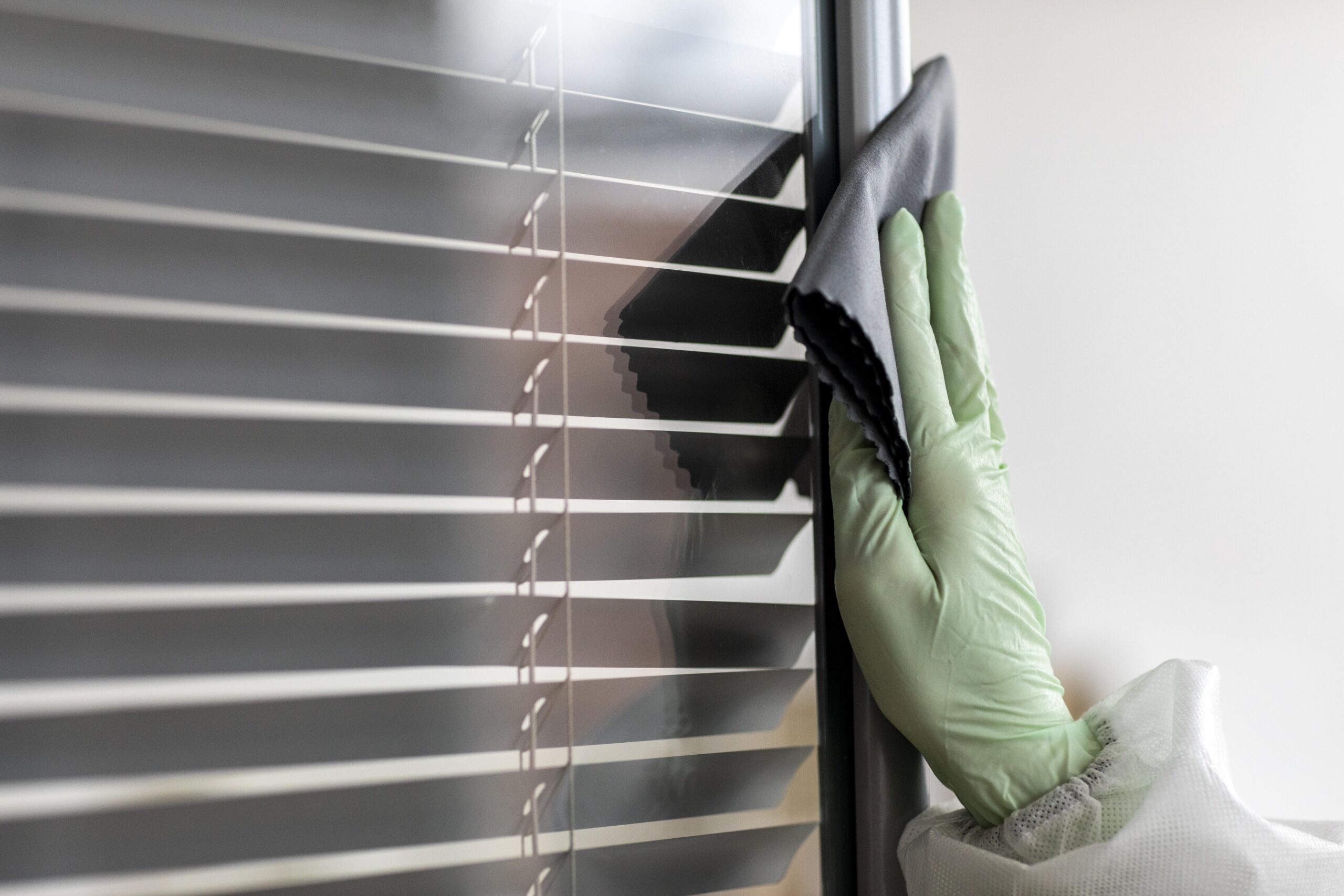
Being so lazy to wash your curtains? Just clean the mould spot without washing. Moulding spots on the curtain not only destroys the aesthetic look of the room but also causes some health issues as well. The good news is you can remove mould without taking your curtains down for a full wash. With the right method, your curtains can look refreshed without any fabric damage.
Let’s delve into the proper steps of how to give your curtains a new, fine look.
Step-by-Step Process to Remove Mould from Curtains Without Washing
Here is the complete step-by-step process for making your curtain a fresh new look:
Safety First
The initial step is to protect yourself and the area. Wear protective gloves, safety googles, an N95 mask, and old clothes because the mould spores may be airborne. For proper ventilation, open the windows of the area. But close the interior doors to avoid the spreading of any spores. You can take a plastic sheet to use under the curtain, which will help to prevent any dust that may fall on the surface.
Identify Affected Spots
Use a flashlight to inspect folds, seams, hems, and any fabric facing the window. These hidden sections often trap moisture and develop mould.
Prepare Solution
Prepare the vinegar solution to remove the mould spot. The most asked question is “Is vinegar effective for removing mould on curtains?” Yes, vinegar has properties of natural disinfectants, plus the vinegar removes the bad odour present in the curtain. Use a spray bottle to mix an equal amount of water and white vinegar. The vinegar solution won’t damage the fabric of the curtain, and kill the mould spores. Baking soda paste and hydrogen peroxide solution can also be used as a cleaning solution.
Spot-Treat Areas
All the affected areas of the curtain should be properly sprayed. You can leave the solution on the curtain for at least an hour. During this time, the solution will absorb into the fabric completely. Some stubborn mould won’t get easily cleaned. You can use a clean cloth and fold it into a pad. Start the cleaning process by taking one edge of the affected area, but make sure to change the fabric once it gets soiled. You may use a soft brush to scrub the stubborn mould spots gently. You can replace the cloth frequently to avoid spreading the spores.
Dry the Curtain Thoroughly
After doing the wiping task, dry the spotted areas. You have the choice to dry it in a properly ventilated area or directly in the sunlight. Sunlight helps inhibit mould regrowth, while airflow prevents moisture from settling. The vinegar smell will fade once the fabric dries.
Prevent Future Mould
After cleaning the mould spores, you can prevent them from returning by keeping the area well-ventilated. Open windows regularly and use extractor fans in the kitchen and bathrooms. Make sure to wipe dust off the window glass and avoid keeping curtains closed all the time, as airflow helps them dry. You need to fix any leaks near the curtains and vacuum them weekly to keep them clean.
Common Causes of Mould on the Curtains
There is a list of the growing mould causes on curtains that include:
- No Exposure to Sunlight: Mould can be found in areas that have low access to sunlight or where the sunlight is completely blocked.
- Poor Ventilation: The surfaces where the airflow is not too good are prone to moisture on the walls and furniture. The mould not just forms but also multiplies on these surfaces.
- Humidity: Rooms that have high humidity form the growing space for the mould. The areas include kitchens and bathrooms. As the humidity level increases, the risk of injury is higher.
- Condensation: In cold weather, some windows allow water to drip on the curtains, which gives rise to the formation of mould on the curtains.
- Dampness: If the curtains are hung near the indoor plants and cooking place, they have full access to the water and other liquids, which not just dampens the curtains’ fabric but also provides a surface for the production of the mould.
- Dust particles: If the curtains are not cleaned frequently, the dust particles on the surface allow the fabric to develop mould even if the temperature is moderate.
Conclusion
Mould on curtains should be dealt with immediately. Fortunately, you don’t always need to remove and wash your curtains to get rid of it. With the right cleaning steps and preventive habits, you can restore freshness, protect the fabric, and maintain a healthier indoor environment.
Don’t let mould spores stay on your curtains for a long time. Cleaning them usually requires taking the curtains down from the rod.